


monkey
Yunnan snub-nosed monkey (scientific name:Rhinopithecus bieti)

Body length ranges from 51–83 cm, with a tail length of 52–75 cm, and a weight of 9–17 kg.
The yunnan snub-nosed monkey does not have golden fur, but is mainly grey-black and white in color.
Its standard chinese name is “yunnan snub-nosed monkey.”
It has a pointed black crest on top of its head, with bluish-grey or flesh-pink skin around the eyes and nose, and an upturned deep blue nose tip.
The back, limbs, and tail are grey-black, with sparse grey-white long hair on the back, while the underside, sides of the neck, hips, and inner limbs are white.
It inhabits high-altitude dark coniferous forests above 3000 meters, with a range between 2500 and 5000 meters.
Its diet consists of lichens, bamboo shoots, tender leaves, buds, and flower buds.
Births are mostly concentrated between march and april.
Females give birth once every two years, with a gestation period of about 7 months.
The yunnan snub-nosed monkey is endemic to china, distributed only in a narrow region at the junction of sichuan, yunnan, and tibet, within the yunling mountains of the hengduan mountain range on the southern edge of the himalayas, between the lancang river and the jinsha river.
In 2019,
MBBCAR selected nine wild animals from China as representatives to raise awareness about understanding viruses at their root and discouraging the hunting of wildlife. These animals were incorporated into leather patches, tags, and packaging as a way to remind people not to make harmful choices, while simply recording their population numbers.
In 2026,
we decided to relaunch the animal series as a way to reflect on whether the call to protect wildlife from seven years ago has truly been fulfilled.
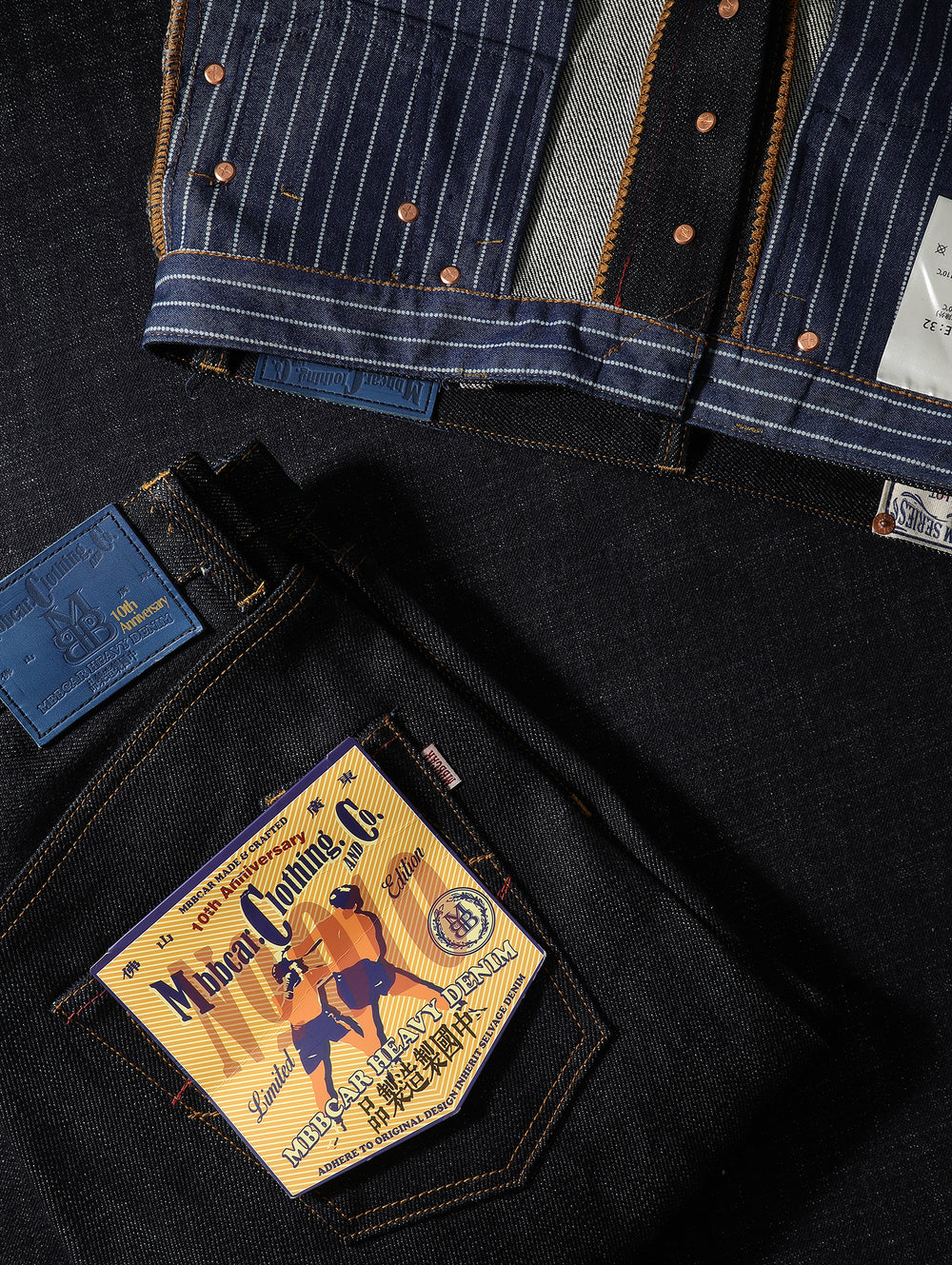
The leather patches, tags, and packaging retain the first-generation animal series design, while the numbers printed on the second-generation pocket lining represent the current population of these wild animals.
By comparing these with the numbers on the leather patches and tags, the changes over the past seven years become visible.
An embossed animal graphic is added to the left back pocket, and the inner waistband features an exclusive lining for the animal series.
As of 2026, the population of yunnan snub-nosed monkeys in china
has increased from fewer than 1,500 in the 1990s to approximately 3,800.