


tiger
South china tiger (scientific name: Panthera tigris ssp. amoyensis)

It belongs to the felidae family and the genus panthera, and is a tiger subspecies endemic to china.
The south china tiger is relatively small in size. Adult males measure about 2.5 meters in length (including tail) and weigh around 150 kg, while females measure about 2.3 meters with a tail length of 80–100 cm and weigh around 120 kg.
It has a round head, short ears, strong and powerful limbs, and a relatively long tail.
The chest and abdomen feature more off-white fur, while the body is orange-yellow with black stripes.
Its stripes are shorter and narrower, with wider spacing compared to bengal and siberian tigers, and diamond-shaped patterns often appear on the sides.
It is a typical mountain forest-dwelling animal, inhabiting tropical rainforests and evergreen broadleaf forests in southern china.
It is also often found in ridgelines, shrublands, and mountainous areas with rocky or gravelly terrain, including deciduous broadleaf and mixed forests.
It lives solitarily and is not social. Mostly active at night, it has a strong sense of smell, is agile, and is a good swimmer, but not adept at climbing trees.
It is carnivorous, feeding on herbivores such as wild boar, deer, and roe deer.
It is found only in china, historically inhabiting central and southern regions, and was declared extinct in the wild in 2012.
In 2019,
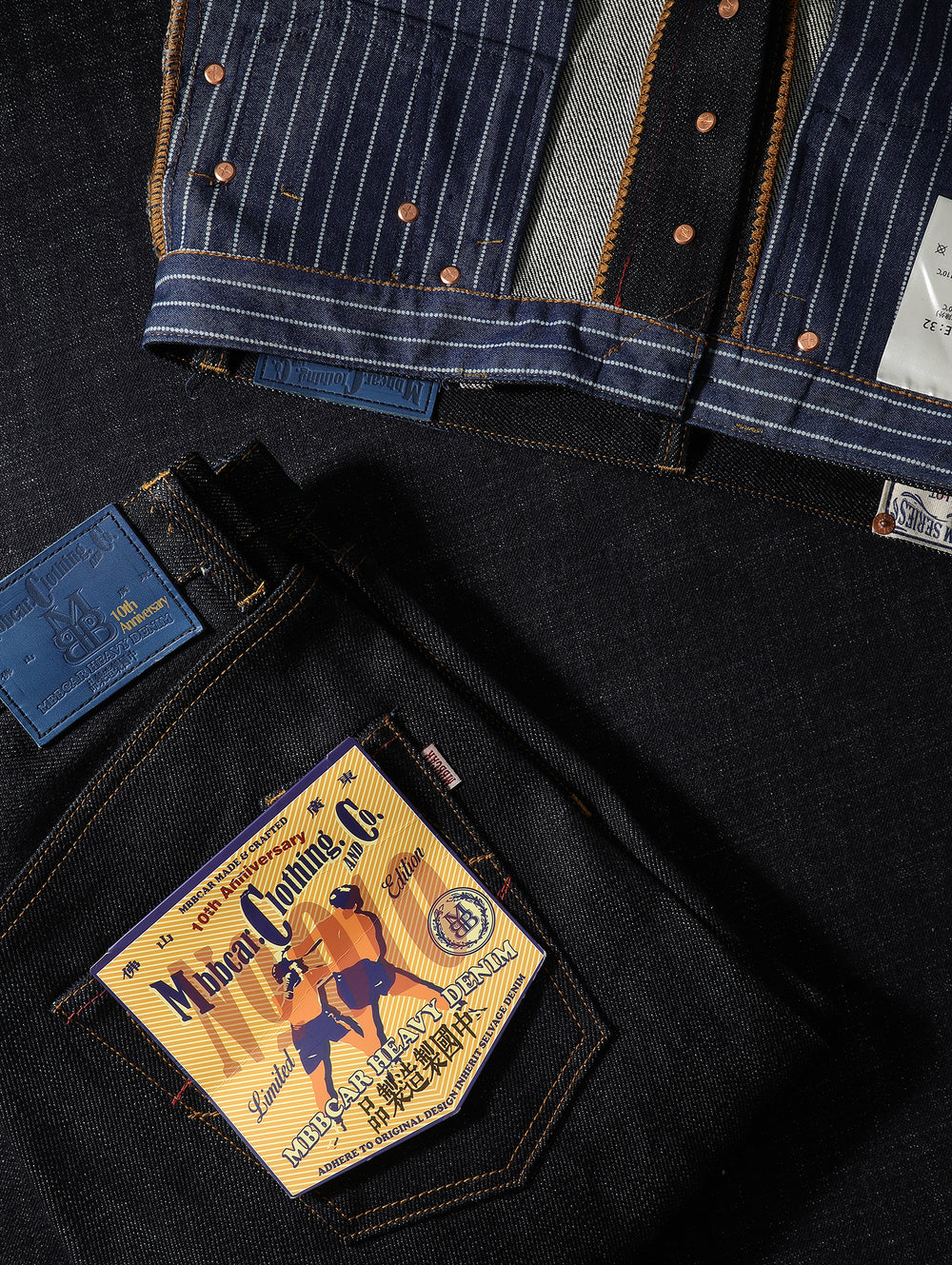
MBBCAR selected nine wild animals from China as representatives to raise awareness about understanding viruses at their root and discouraging the hunting of wildlife. These animals were incorporated into leather patches, tags, and packaging as a way to remind people not to make harmful choices, while simply recording their population numbers.
In 2026,
we decided to relaunch the animal series as a way to reflect on whether the call to protect wildlife from seven years ago has truly been fulfilled.
The leather patches, tags, and packaging retain the first-generation animal series design, while the numbers printed on the second-generation pocket lining represent the current population of these wild animals.
By comparing these with the numbers on the leather patches and tags, the changes over the past seven years become visible.
An embossed animal graphic is added to the left back pocket, and the inner waistband features an exclusive lining for the animal series.
As of 2026, the wild population of south china tigers is 0.